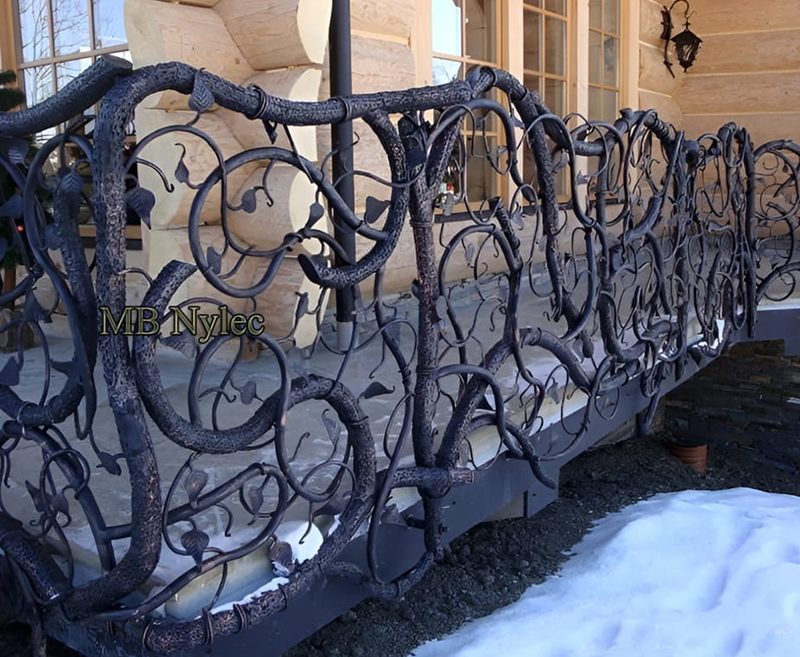
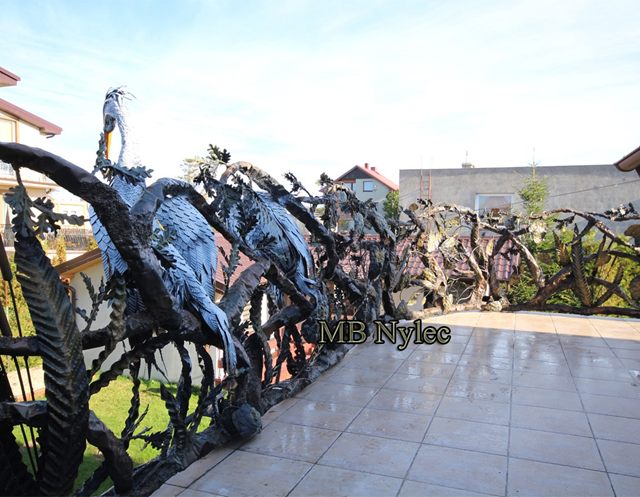
There is no repeating panel here and no line of symmetry. The railing was composed as a climbing plant that has taken hold of a terrace edge: heavy, knotted stems rise from the base rail, arch over and dive back down, while thinner shoots curl into spirals and tendrils between them. Small pointed leaves are scattered along the growth, never in quite the same place twice.
Each bar was heated in the fire and bent by hand, so the stems swell and narrow the way a real vine does. Their surface was left rough and bark-like instead of being ground smooth, and a copper-brown tone in the texture lifts the black finish wherever the light falls. Beneath the free-flowing infill, the lower rail is solidly braced to keep the whole run rigid, and the top rail follows one clear, comfortable line for the hand, so the safety function is never lost in the ornament.
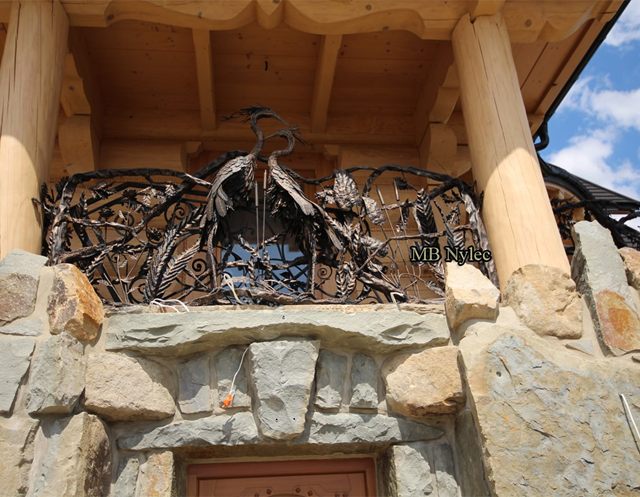
Photographed on a log house in snow, the climber suits timber and stone architecture, country homes, mountain lodges and gardens where a building should look as if it grew out of its setting. It is made in stages, from raw bar to final fitting on site, and every new version is drawn for its own terrace, balcony or staircase, with denser or lighter growth as you prefer. Browse other nature-inspired railings, or the balcony railing with herons and wheat.
 Sculpture Studio